

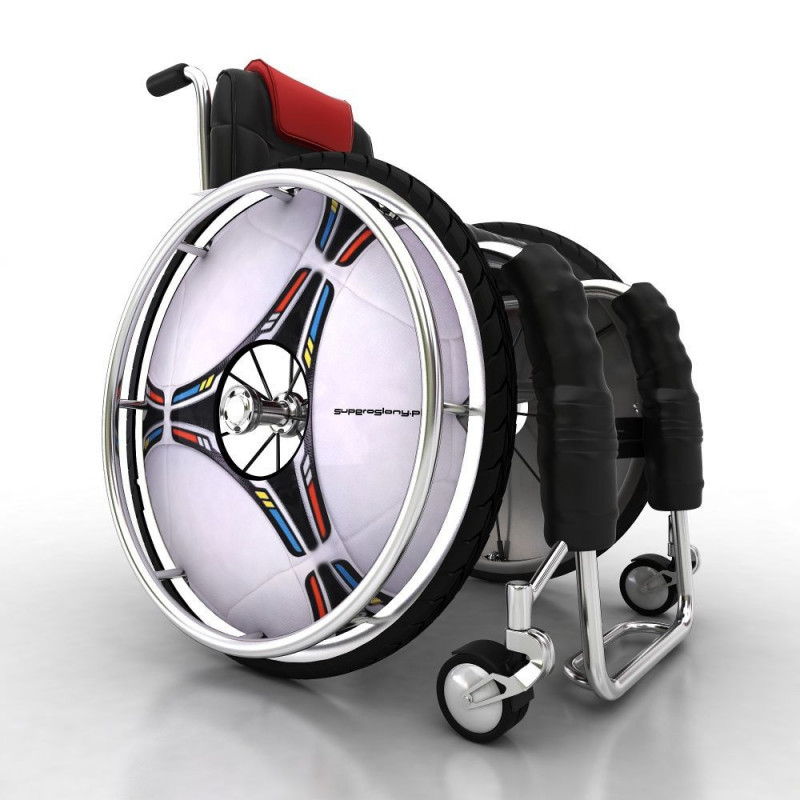
The Tango 12 is the official ball of the 2012 European Football Championships in Poland and Ukraine. It was presented as a continuation of the tradition of innovative ball design that has been a key element of major tournaments for years. The Tango 12 combines modern technology with classic style, attracting the attention of both players and fans.
The name "Tango" refers to the famous Tango España ball used in the 1982 World Cup. The new version, the Tango 12, was designed by Adidas, a company that has supplied balls to major sporting events for decades. Designers drew inspiration from this classic design while incorporating modern elements to improve the ball's performance on the pitch.
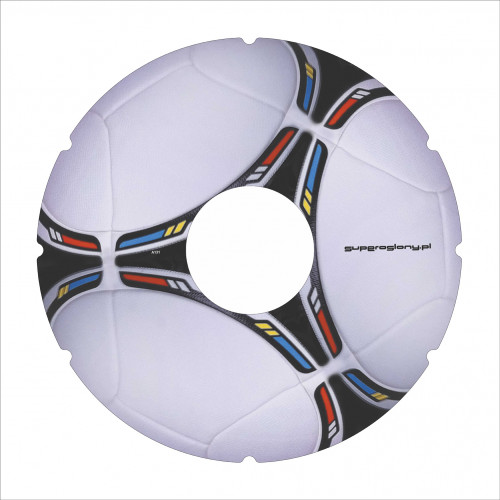
The Tango 12 boasts a distinctive look, with dynamic patterns in white, black, and red. Its outer shell is made of synthetic materials that provide excellent control, grip, and durability. Thermally Bonded technology heat-welds individual panels of the ball, making them more water-resistant and enabling a better playing experience.
The Tango 12 ball was created with professional football in mind. Its aerodynamic design improves flight stability, facilitating precise shots and passes. Players emphasized that the Tango 12 fits comfortably in the hand and provides excellent ball control in various weather conditions. Thanks to its innovative technological solutions, the Tango 12 has gained recognition among footballers worldwide.
Euro 2012 is not just a sporting event, but also a great opportunity to promote the culture and traditions of both hosts – Poland and Ukraine. Tango 12 has become a symbol of the tournament, earning a place in the hearts of fans and in football history. The ball was used in the tournament's most important matches, including the final, further underscoring its significance.
The Tango 12 has gone down in history as a ball that combined modernity with classic football traditions. Its design was a continuation of Adidas's long-standing partnership with UEFA, as well as a nod to its football heritage. Today, the Tango 12 is often remembered by fans and players alike, who remember the excitement of the 2012 European Championship.
Tango 12 is not just a ball, but also a symbol of innovation and passion for football. Its unique design, blend of tradition and modern technology, and excellent on-field performance made it an icon of Euro 2012. It is a work of sporting art that will forever remain in the memory of those who had the opportunity to see and play with it.
The Tango 12 is the official ball of the 2012 European Football Championships in Poland and Ukraine. It was presented as a continuation of the tradition of innovative ball design that has been a key element of major tournaments for years. The Tango 12 combines modern technology with classic style, attracting the attention of both players and fans.
The name "Tango" refers to the famous Tango España ball used in the 1982 World Cup. The new version, the Tango 12, was designed by Adidas, a company that has supplied balls to major sporting events for decades. Designers drew inspiration from this classic design while incorporating modern elements to improve the ball's performance on the pitch.
The Tango 12 boasts a distinctive look, with dynamic patterns in white, black, and red. Its outer shell is made of synthetic materials that provide excellent control, grip, and durability. Thermally Bonded technology heat-welds individual panels of the ball, making them more water-resistant and enabling a better playing experience.
The Tango 12 ball was created with professional football in mind. Its aerodynamic design improves flight stability, facilitating precise shots and passes. Players emphasized that the Tango 12 fits comfortably in the hand and provides excellent ball control in various weather conditions. Thanks to its innovative technological solutions, the Tango 12 has gained recognition among footballers worldwide.
Euro 2012 is not just a sporting event, but also a great opportunity to promote the culture and traditions of both hosts – Poland and Ukraine. Tango 12 has become a symbol of the tournament, earning a place in the hearts of fans and in football history. The ball was used in the tournament's most important matches, including the final, further underscoring its significance.
The Tango 12 has gone down in history as a ball that combined modernity with classic football traditions. Its design was a continuation of Adidas's long-standing partnership with UEFA, as well as a nod to its football heritage. Today, the Tango 12 is often remembered by fans and players alike, who remember the excitement of the 2012 European Championship.
Tango 12 is not just a ball, but also a symbol of innovation and passion for football. Its unique design, blend of tradition and modern technology, and excellent on-field performance made it an icon of Euro 2012. It is a work of sporting art that will forever remain in the memory of those who had the opportunity to see and play with it.
The history of football spans centuries and is full of fascinating twists and turns that have shaped the sport into what it is today. Although modern football as we know it has its roots in 19th-century England, its original forms date back to ancient times.
The first mention of ball games dates back to ancient civilizations. In China, around 3000 BC, players played "cuju," a game in which players had to kick a leather ball into the goal. Ancient Egypt and Greece also had similar forms of ball games. In Greece, the game "episkyros" was known, which was similar to modern rugby and involved passing the ball between teams.
In medieval Europe, ball games grew in popularity, with different regions having their own rules. In England, for example, the game was often chaotic and played in the streets, with the goal of getting the ball into the opponent's goal. At the time, the game was a source of conflict, and local authorities often banned it due to the riots and chaos it caused.
The Industrial Revolution and urban development in the 19th century contributed to the formalization of the game. In 1863, the English Football Association (FA) was founded in London and introduced the first official rules of the game. These, known as the "FA Rules," laid the foundation for the development of football as an organized sport. Key changes included the introduction of goals and the designation of playing areas.
After the rules were established in England, football began to gain popularity in other countries. In 1872, the first international match took place, pitting England against Scotland. Soon after, associations were formed in other countries, and in 1904, the Fédération Internationale de Football Association (FIFA) was founded, uniting the various national associations.
In the early 20th century, football began to gain professional status. The first professional leagues were formed, and in 1930, the first FIFA World Cup was held in Uruguay, a turning point in the history of the sport. The championship quickly became one of the most important sporting events in the world.
In the second half of the 20th century and the early 21st, football underwent many changes. Advances in technology influenced the way the sport was played and perceived. Modern balls were introduced, which were more aerodynamic and durable, significantly impacting the game. In 1991, the UEFA Champions League was established and has become one of the most important club tournaments in Europe.
The history of football is a tale of evolution, tradition, and passion. From ancient games to modern competitions on the world's biggest stages, football has become a global phenomenon that connects millions of people. Its development, rule changes, and professionalization have made it one of the most popular sports in the world today, with each new generation of fans contributing to its continued history.