

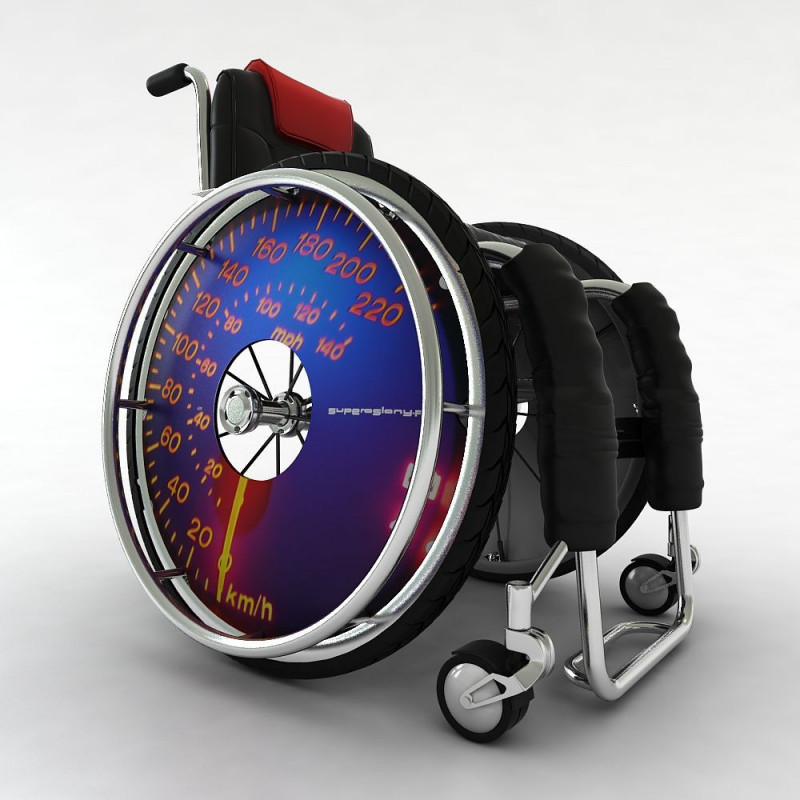
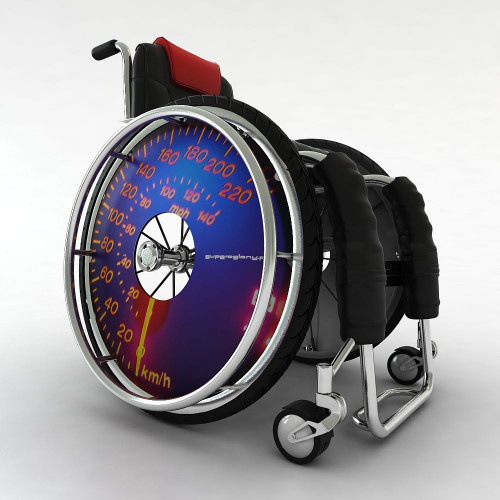
This wheelchair wheel cover is an innovative element that combines functionality with aesthetics, and its design, inspired by a car speedometer, adds a unique touch. In an era where personal accessories are becoming a way of expressing oneself, this project aims not only to protect the spokes but also to introduce automotive elements synonymous with dynamism and modernity into everyday use.
The car speedometer, an icon of the automotive industry, is rich in symbolism and technical details. In the graphic design of a wheelchair wheel cover, speedometer motifs can be used in a variety of ways. The use of stylized indicators, a speed scale, and mechanical details on the cover surface introduces a modern and dynamic design that reflects the user's personality.
Wheel covers can be made from a variety of materials, allowing for a wide range of finishes. The surface can be coated with graphics resembling a speedometer dial, as well as automotive-inspired colors such as vibrant red, deep blue, or muted gray. This allows users to personalize their wheelchairs, giving them a unique look that reflects their lifestyle.
In addition to their visual appeal, wheel covers also have practical benefits. They protect the spokes from damage and clothing entanglement, increasing user safety. Designing wheel covers in a speedometer-like design can also incorporate technologies such as built-in LED lighting, which mimics the speedometer's operation by illuminating depending on the wheelchair's speed. This element further emphasizes the dynamic and modern design.
It's also worth incorporating references to the history of speedometers into the design, which can be an interesting addition. Retro designs can be used that resemble classic speedometers, creating a dialogue between the past and the modern. Such a design will certainly attract attention and spark interest among both young and old users.
The graphic design of this wheelchair wheel cover, inspired by a car speedometer, combines functionality with aesthetics, creating a unique accessory that reflects a modern lifestyle. Thanks to the use of automotive motifs, customization options, and additional features such as LED lighting, these covers become not only a practical element but also an expression of the user's personality. By introducing such an innovative design, we can change the perception of wheelchairs, making them attractive and functional in everyday life.
This wheelchair wheel cover is an innovative element that combines functionality with aesthetics, and its design, inspired by a car speedometer, adds a unique touch. In an era where personal accessories are becoming a way of expressing oneself, this project aims not only to protect the spokes but also to introduce automotive elements synonymous with dynamism and modernity into everyday use.
The car speedometer, an icon of the automotive industry, is rich in symbolism and technical details. In the graphic design of a wheelchair wheel cover, speedometer motifs can be used in a variety of ways. The use of stylized indicators, a speed scale, and mechanical details on the cover surface introduces a modern and dynamic design that reflects the user's personality.
Wheel covers can be made from a variety of materials, allowing for a wide range of finishes. The surface can be coated with graphics resembling a speedometer dial, as well as automotive-inspired colors such as vibrant red, deep blue, or muted gray. This allows users to personalize their wheelchairs, giving them a unique look that reflects their lifestyle.
In addition to their visual appeal, wheel covers also have practical benefits. They protect the spokes from damage and clothing entanglement, increasing user safety. Designing wheel covers in a speedometer-like design can also incorporate technologies such as built-in LED lighting, which mimics the speedometer's operation by illuminating depending on the wheelchair's speed. This element further emphasizes the dynamic and modern design.
It's also worth incorporating references to the history of speedometers into the design, which can be an interesting addition. Retro designs can be used that resemble classic speedometers, creating a dialogue between the past and the modern. Such a design will certainly attract attention and spark interest among both young and old users.
The graphic design of this wheelchair wheel cover, inspired by a car speedometer, combines functionality with aesthetics, creating a unique accessory that reflects a modern lifestyle. Thanks to the use of automotive motifs, customization options, and additional features such as LED lighting, these covers become not only a practical element but also an expression of the user's personality. By introducing such an innovative design, we can change the perception of wheelchairs, making them attractive and functional in everyday life.
The speedometer, one of the most important devices in a car, measures the vehicle's speed. Its history dates back to the beginnings of the automotive industry and reflects the technological advances that have occurred over the years.
The first speedometers appeared in the early 19th century, when experiments with steam-powered vehicles began. One of the first known examples was the so-called "mechanical speedometer," which operated by the rotation of a wheel. However, at that time, speed measurement was more theoretical and imprecise.
In 1840, American inventor Edward Adams constructed one of the first mechanical speedometers, which used a gear system to measure speed. However, this device had limited applications and did not gain widespread popularity.
The real development of speedometers occurred in the second half of the 19th century, when the first internal combustion engines were developed. In 1888, Karl Benz, one of the pioneers of the automotive industry, introduced a speedometer into his car, which had a significant impact on the development of this type of device.
In the early 20th century, electric speedometers emerged, offering greater precision and reliability. In 1910, American automaker Ford introduced the speedometer as standard equipment in its vehicles, contributing to its popularity among drivers.
In the 1920s and 1930s, speedometers gained popularity, and their technology became increasingly advanced. Various types of speedometers were introduced, including mechanical and electrical, as well as various forms of indicators, such as analog and digital dials.
In the 1960s, with the advancement of electronic technology, speedometers became more complex and accurate. Digital speedometers were introduced, providing drivers with more detailed information and enabling integration with other vehicle systems, such as navigation systems.
Today, car speedometers incorporate advanced technologies, including GPS systems, which allow for accurate speed measurements regardless of weather conditions. Modern speedometers often also offer additional features, such as speeding warnings, route information, and fuel consumption data.
Digital speedometers, which have dominated the market, are easier to read and offer a wider range of information, making them more functional for modern drivers.
The history of the automotive speedometer is a fascinating tale of technological innovations that have evolved in response to driver needs and the development of the automotive industry. From simple mechanisms to advanced electronic systems, the speedometer has become an integral part of every vehicle, helping drivers drive safely and intelligently. Thanks to constant technological advancements, the future of speedometers seems even more exciting.