

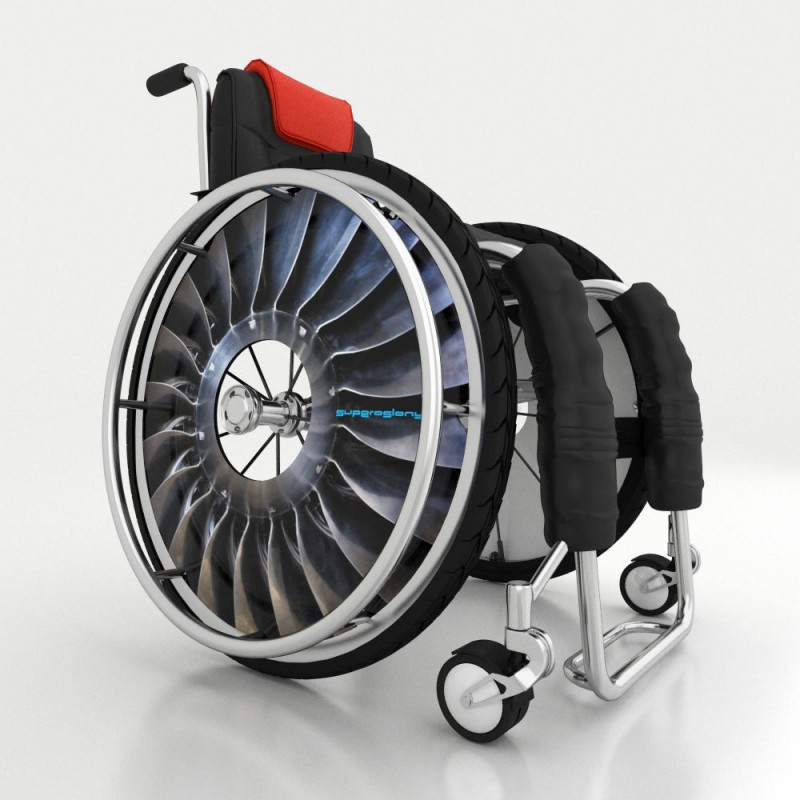
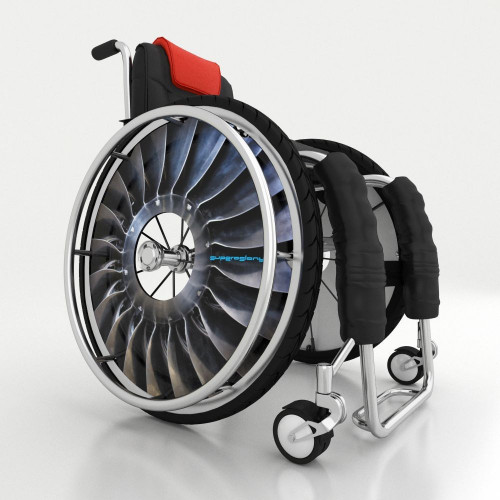
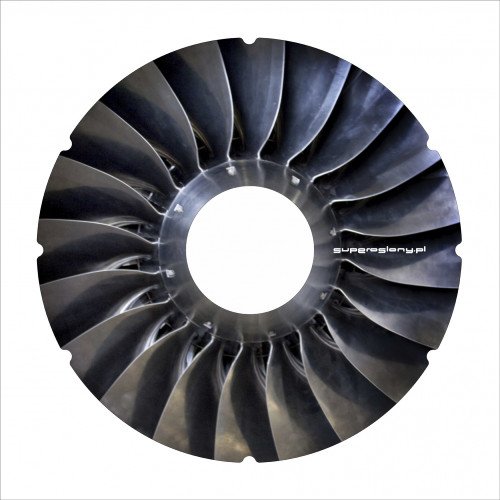
If you're passionate about mechanics and have experience working with advanced technologies, our aircraft turbine rotor shroud project will certainly catch your eye. We offer an innovative shroud that's crucial to the safety and efficiency of a turbojet engine—one of the most critical components of modern jet aircraft. Our solution is designed for specialists who want to participate in a project involving one of the most important components of modern aerospace engineering.
A turbojet engine is a type of jet engine that uses the energy of exhaust gases to drive a shaft that houses both a turbine and a compressor. This type of engine is characterized by high efficiency, making it widely used in passenger aircraft, military aircraft, and spaceflights.
The operation of a turbojet engine is based on four main stages: air intake, compression in the compressor, mixing with fuel and combustion in the combustion chamber, and energy generation in the turbine, which drives the compressor. The turbine is a key element, as it generates the power necessary to operate the entire engine. The turbine rotor cover, in turn, serves as a protective shield, protecting engine components from mechanical damage and minimizing the risk of failure.
The turbine rotor cover is a component that protects both the rotor itself and other engine components. The cover's primary purpose is to prevent contamination that could disrupt engine operation and to ensure safety in the event of rotor damage. The turbine rotor, exposed to enormous thermal and mechanical loads, requires exceptional protection to maintain full operational efficiency over a long period of operation.
The turbine rotor cover must meet high technical requirements, such as:
High temperature resistance – the turbine rotor is exposed to temperatures of up to 1500°C, so the cover must be made of materials resistant to extreme conditions.
Resistance to mechanical damage – due to the intense movement of the rotor, the cover must be able to withstand impacts, vibrations and other mechanical loads.
Minimizing weight – the cover must be made of lightweight but durable materials so as not to burden the engine and affect its performance.
Durability – the cover should be long-lasting and wear-resistant so as not to require frequent replacements and maintenance.
Our project focuses on creating a turbine rotor cover that meets all these requirements while maintaining optimal technical parameters. Our team of engineers and mechanical and aerospace specialists is developing a cover that is not only durable but also lightweight and effective in protecting the turbine rotor from damage.
The design is based on modern composite materials characterized by excellent resistance to high temperatures and high mechanical strength. Thanks to the use of the latest production technologies, our cover will be an ideal solution for ensuring the durability and safety of the turbojet engine.
Advanced technology – we use the latest materials and production methods, which ensures the high quality and reliability of our solution.
Tailoring to individual needs – we offer design and production of covers tailored to the specific technical requirements of our customers.
Safety and reliability – our turbine rotor cover provides maximum protection for the engine and its components, minimizing the risk of failure.
High efficiency – the design is optimized to reduce weight and improve engine efficiency, resulting in improved fuel efficiency and performance.
If mechanics are your passion and you'd like to participate in a project involving cutting-edge technologies in the aviation industry, our offer is perfect for you. Designing a turbine rotor shroud is a challenge that will allow you to fully utilize your mechanical engineering skills and knowledge. Don't wait, join us and participate in creating innovative solutions for the aviation industry!
If you're passionate about mechanics and have experience working with advanced technologies, our aircraft turbine rotor shroud project will certainly catch your eye. We offer an innovative shroud that's crucial to the safety and efficiency of a turbojet engine—one of the most critical components of modern jet aircraft. Our solution is designed for specialists who want to participate in a project involving one of the most important components of modern aerospace engineering.
A turbojet engine is a type of jet engine that uses the energy of exhaust gases to drive a shaft that houses both a turbine and a compressor. This type of engine is characterized by high efficiency, making it widely used in passenger aircraft, military aircraft, and spaceflights.
The operation of a turbojet engine is based on four main stages: air intake, compression in the compressor, mixing with fuel and combustion in the combustion chamber, and energy generation in the turbine, which drives the compressor. The turbine is a key element, as it generates the power necessary to operate the entire engine. The turbine rotor cover, in turn, serves as a protective shield, protecting engine components from mechanical damage and minimizing the risk of failure.
The turbine rotor cover is a component that protects both the rotor itself and other engine components. The cover's primary purpose is to prevent contamination that could disrupt engine operation and to ensure safety in the event of rotor damage. The turbine rotor, exposed to enormous thermal and mechanical loads, requires exceptional protection to maintain full operational efficiency over a long period of operation.
The turbine rotor cover must meet high technical requirements, such as:
High temperature resistance – the turbine rotor is exposed to temperatures of up to 1500°C, so the cover must be made of materials resistant to extreme conditions.
Resistance to mechanical damage – due to the intense movement of the rotor, the cover must be able to withstand impacts, vibrations and other mechanical loads.
Minimizing weight – the cover must be made of lightweight but durable materials so as not to burden the engine and affect its performance.
Durability – the cover should be long-lasting and wear-resistant so as not to require frequent replacements and maintenance.
Our project focuses on creating a turbine rotor cover that meets all these requirements while maintaining optimal technical parameters. Our team of engineers and mechanical and aerospace specialists is developing a cover that is not only durable but also lightweight and effective in protecting the turbine rotor from damage.
The design is based on modern composite materials characterized by excellent resistance to high temperatures and high mechanical strength. Thanks to the use of the latest production technologies, our cover will be an ideal solution for ensuring the durability and safety of the turbojet engine.
Advanced technology – we use the latest materials and production methods, which ensures the high quality and reliability of our solution.
Tailoring to individual needs – we offer design and production of covers tailored to the specific technical requirements of our customers.
Safety and reliability – our turbine rotor cover provides maximum protection for the engine and its components, minimizing the risk of failure.
High efficiency – the design is optimized to reduce weight and improve engine efficiency, resulting in improved fuel efficiency and performance.
If mechanics are your passion and you'd like to participate in a project involving cutting-edge technologies in the aviation industry, our offer is perfect for you. Designing a turbine rotor shroud is a challenge that will allow you to fully utilize your mechanical engineering skills and knowledge. Don't wait, join us and participate in creating innovative solutions for the aviation industry!
The aircraft turbine rotor is one of the key components of modern aircraft engines. Its history dates back to the early 20th century and is closely linked to the development of jet propulsion technology, which revolutionized air transport and enabled rapid long-distance travel. The creation of the aircraft turbine rotor is the result of years of research, experimentation, and innovation in mechanical and aerospace engineering.
The first experiments with jet propulsion began in the 1920s, when many engineers tried to find a way to use exhaust gases to power vehicles. However, the real breakthrough came in the 1930s and 1940s, when the first jet engines began to be developed in Europe and the United States. The primary goal was to create a propulsion system that could offer greater power and efficiency than piston engines.
In 1937, British engineer Frank Whittle, considered one of the fathers of turbojet propulsion, presented his prototype engine, which used a turbine to drive a compressor and generate propulsive power. In Germany, Hans von Ohain was simultaneously working on a similar engine, which was used in the first German jet aircraft , the Heinkel He 178, in 1939. However, it was Whittle and his Power Jets W.1 engine that laid the foundation for later turbojet technologies.
The development of turbojet engines required the development of complex systems capable of efficiently converting the energy of exhaust gases. The turbine, and in particular its rotor, played a key role in this process. The turbine rotor is responsible for rotating under the influence of the flowing hot gases produced by the combustion of fuel in the combustion chamber. The rotating rotor drives the compressor, which in turn compresses the air entering the combustion chamber, creating a cycle that allows the engine to continuously run.
The first turbines were relatively simple, but over the years, requirements for their durability and efficiency increased. Early rotors were typically of a single-piece construction, made of high-temperature-resistant metals, but it quickly became apparent that more advanced technologies were needed to withstand the extreme conditions found in aircraft turbines.
In the 1950s and 1960s, advances in high-temperature alloys and composite materials enabled the creation of more advanced turbine rotors. Engineers began using nickel, cobalt, and titanium alloys, which were characterized by strength and resistance to extreme temperatures. New heat treatment technologies enabled even higher efficiency in the production of rotors, capable of withstanding temperatures of up to 1500°C.
The 1970s also saw the introduction of advanced cooling technologies that reduced the operating temperature of rotors and turbines. Internal rotor cooling, based on a system of channels and pipes that conducted cold air into the component, was a key step toward improving turbine durability and efficiency. Additionally, the use of protective coatings, such as ceramic coatings, also helped increase resistance to high temperatures.
Modern aircraft turbine rotors are the result of decades of innovation in materials, aerodynamics, and mechanical engineering. Modern jet engines, such as turbofans (used in modern passenger aircraft), turboprops (used in regional aircraft), and jet engines in military aircraft, use multistage turbines in which the rotor is the central element of propulsion.
The use of advanced composite materials and metal alloys, precision rotor shaping technology, and innovative cooling systems have resulted in engines with high efficiency and low fuel consumption. Furthermore, computer systems and diagnostic technologies enable real-time monitoring of rotor health, ensuring their longevity and minimizing the risk of failure.
The history of the aircraft turbine rotor is a story of continuous improvement in jet propulsion technology. From the first experiments with jet propulsion, through the development of turbines in jet engines, to today's advanced designs, the turbine rotor is a key component that powers aircraft worldwide. Today, it is a complex and precisely designed component, the evolution of which is the result of years of research and engineering innovation.