



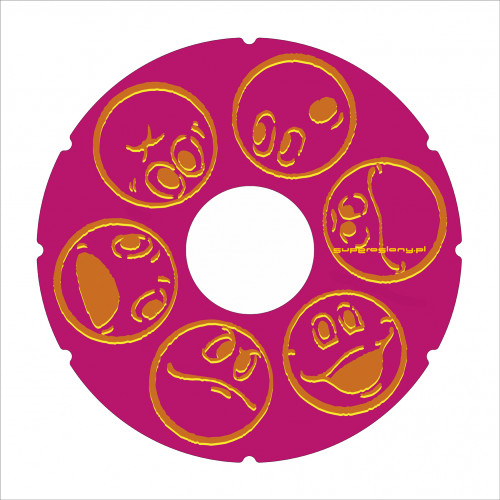
Emoticons, also known as emojis, have become an integral part of modern communication. By infusing color and emotion into text, they allow for faster and more comprehensible expressions of feelings. But could humanity function without them? This question is becoming increasingly relevant in the digital age.
Emojis have evolved from simple symbols like :-) and :-( to complex images that convey a wide range of emotions and states. Their history dates back to the 1980s, when they were primarily used in text messages. Today, they are present in social media, emails, and messaging apps, where they are a vital element of interaction.
One of emojis' greatest strengths is their ability to complement text. It's often difficult to fully express emotions through words. Emoticons can add context, helping to interpret the sender's intentions. For example, a message written in a serious tone might be interpreted as a joke if it ends with a smiley face.
Emojis also help build relationships. Virtual communication often lacks the element of body language, and emojis can compensate to some extent by adding a personal touch to the conversation.
While emoticons have many advantages, people can live without them. In fact, communication without emoticons relies on traditional forms of emotional expression. Literature, art, and film have long been able to convey feelings and intentions without the use of graphic symbols. In spoken and written language, people use tone of voice, gestures, and facial expressions to express their emotions.
Without emojis, people can turn to more sophisticated forms of self-expression. Poets, writers, and artists have used various tools to convey their feelings and thoughts, and their works demonstrate that emotions can be expressed in profound and multi-layered ways, even without the support of graphic symbols.
In a world where communication is increasingly digital, the lack of emojis can lead to misunderstandings. The high reliance on text makes interpreting intent more difficult. The lack of emojis can cause some messages to be perceived as overly harsh or aggressive.
Another challenge is cultural context. Emojis can have different meanings in different cultures. Without them, communication can be more susceptible to errors related to cultural differences and interpretations.
Although emojis have become a popular and convenient communication tool, they are not essential to life. People have the ability to express emotions in a variety of ways, using both words and gestures. While communication without emojis may be more complex and require more attention, it is not impossible.
In the face of a rapidly changing digital world, it's worth asking what place emojis occupy in our lives and how they influence our relationships. It's possible that their presence isn't just a convenience, but also a way to forge deeper bonds in a globalized world where communication has become a key element of modern life.
Emoticons, also known as emojis, have become an integral part of modern communication. By infusing color and emotion into text, they allow for faster and more comprehensible expressions of feelings. But could humanity function without them? This question is becoming increasingly relevant in the digital age.
Emojis have evolved from simple symbols like :-) and :-( to complex images that convey a wide range of emotions and states. Their history dates back to the 1980s, when they were primarily used in text messages. Today, they are present in social media, emails, and messaging apps, where they are a vital element of interaction.
One of emojis' greatest strengths is their ability to complement text. It's often difficult to fully express emotions through words. Emoticons can add context, helping to interpret the sender's intentions. For example, a message written in a serious tone might be interpreted as a joke if it ends with a smiley face.
Emojis also help build relationships. Virtual communication often lacks the element of body language, and emojis can compensate to some extent by adding a personal touch to the conversation.
While emoticons have many advantages, people can live without them. In fact, communication without emoticons relies on traditional forms of emotional expression. Literature, art, and film have long been able to convey feelings and intentions without the use of graphic symbols. In spoken and written language, people use tone of voice, gestures, and facial expressions to express their emotions.
Without emojis, people can turn to more sophisticated forms of self-expression. Poets, writers, and artists have used various tools to convey their feelings and thoughts, and their works demonstrate that emotions can be expressed in profound and multi-layered ways, even without the support of graphic symbols.
In a world where communication is increasingly digital, the lack of emojis can lead to misunderstandings. The high reliance on text makes interpreting intent more difficult. The lack of emojis can cause some messages to be perceived as overly harsh or aggressive.
Another challenge is cultural context. Emojis can have different meanings in different cultures. Without them, communication can be more susceptible to errors related to cultural differences and interpretations.
Although emojis have become a popular and convenient communication tool, they are not essential to life. People have the ability to express emotions in a variety of ways, using both words and gestures. While communication without emojis may be more complex and require more attention, it is not impossible.
In the face of a rapidly changing digital world, it's worth asking what place emojis occupy in our lives and how they influence our relationships. It's possible that their presence isn't just a convenience, but also a way to forge deeper bonds in a globalized world where communication has become a key element of modern life.
Emoticons, also known as emojis, are graphic symbols that express emotions and states. Their history dates back to the 1980s and is closely linked to the development of communication technologies. Emoticons have revolutionized the way people express feelings through text communication, and their evolution from simple symbols to complex images has been a fascinating process.
The first emoticons appeared in 1982, when American computer scientist Scott Fahlman proposed using simple symbols to denote jokes in emails. In a post on a university forum, Fahlman suggested that jokes be denoted by a combination of characters, creating a smiley face :-) and a sad face :-(. His proposal quickly gained popularity, becoming a common convention in online communication.
Over time, emojis began to evolve. Users began creating increasingly complex character combinations, leading to the creation of more diverse emojis. For example, a few characters could convey different emotions, such as surprise (:-O) or a heart-shaped smiley (^_^).
As communication platforms evolved, emoticons became an integral part of internet culture. In the 1990s, emoticons began appearing in early messaging programs like ICQ and AOL Instant Messenger, contributing to their popularity.
In 1999, Japanese designer Shigetaka Kurita created the first emoji sets for the mobile operator NTT DoCoMo. These small, colorful icons were intended to facilitate communication in text messages, offering users a wider range of emotional expressions than traditional emoticons. Emoji gained popularity in Japan, and their diversity—from faces to food to everyday objects—allowed for more creative and diverse forms of communication.
Over the following years, emoji gained popularity worldwide. In 2010, the Unicode Consortium, the organization responsible for standardizing writing systems, incorporated emoji into its standard, enabling their use across platforms and devices. This made emoji universal, and their use in cross-cultural communication increased.
Today, emoticons and emoji are an integral part of communication across social media, text messaging, and email. Platforms like WhatsApp, Facebook, and Instagram regularly update their emoji sets, introducing new symbols that reflect changing social and cultural norms. In recent years, emojis representing diversity—different categories of race, gender, and sexual orientation—have also emerged, demonstrating the growing need for inclusivity in visual communication.
The origin story of emoticons and emojis is a fascinating tale of how humans are transforming communication in the digital age. Emoticons, which began as simple symbols, have evolved into a complex visual language that has a profound impact on how we express ourselves and our emotions. As technology advances, we can expect emoticons to evolve, adapting to the needs of users in an increasingly complex and globalized world.